
North Carolina Police Blotter
No single official blotter covers all of North Carolina. Counties go their own way. A longer arrest-log view might live on a sheriff's page or in a weekly report. It may also sit in a state agency's press archive. Local news coverage can hold it too. Each layer answers a different question. A jail log tracks intake and custody. A press release picks which events to announce, and news adds context that logs lack. A court portal follows the case once charges are filed.
Keep those layers straight when you chase an older arrest. A highway patrol release may describe a roadway arrest. The booking record sits with the county or regional detention system that received the person. A court result may later show a plea, a trial, or an expunction. It will not say whether anyone remains in jail today. The date and the source name carry real meaning. Read them as part of the entry.
Note: A longer archive adds context; it does not prove every North Carolina arrest or booking appears.
North Carolina County Log Patterns
County arrest logs in North Carolina differ by format and by depth. Some counties publish an arrest blotter. Others offer a dated report or a news archive. A current-custody search may show little admission history. Across the state, published log depth runs from a few rolling days to months or years, and more history still does not prove completeness. A county page can miss someone arrested there if booking occurred across the county line or in a shared facility. Ask the sheriff or detention custodian about its log.
The Alamance County Sheriff's press-release archive is one example of an announcement channel. It carries selected news, not every jail admission. The Avery Journal-Times arrest-report archive works differently. It is a newsroom record, better read as secondary reporting than as a jail roster.
| Source type | What it can contain | How to read it |
|---|---|---|
| County booking or arrest log | Admissions, releases, or entries within the custodian's chosen window | Check whether it includes released people and note the date field. |
| Sheriff press archive | Selected enforcement announcements and public-safety events | It is a narrative archive, not a complete booking list. |
| State agency news release | Significant highway enforcement events or operation results | Follow the receiving county for the jail booking record. |
| News arrest report | Stories selected and edited by a local newsroom | Use it as reporting; confirm names and case status with public records. |
| Court case search | Hearings, charges, and later case outcomes | It is a court layer, not a custody or jail blotter. |
For current local links, start with the county named in the entry and follow its records path. The North Carolina County Directory routes readers to county sites. A county seat still does not guarantee the county jail was the booking destination.
Read North Carolina Arrest Dates
A North Carolina blotter entry can carry several dates. A search filter may use only one. Booking marks detention intake. The incident date refers to the event itself. A release date marks a later custody change when reported, a story date reflects publication or an update, and a vendor import date shows when the entry reached the display.
| Entry field | How to read it in a North Carolina arrest log |
|---|---|
| Booking or intake | When a receiving detention system records the person entering custody. |
| Incident | When the event under investigation took place, which may differ from arrest or booking. |
| Release | A later custody change, if that source publishes it. |
| Publication or update | When a newsroom or agency posted or revised its item. |
| Import | When data reached a vendor display, not necessarily the arrest date. |
| Photo | Availability follows the custodian's policy and record status; it is not uniform statewide. |
Check these points before reading North Carolina arrest dates:
- Read the field name. Do not call an incident date an arrest or booking date.
- Check the source's update note. A page can post after the event or update an older story later.
- Compare the custodian. The arresting agency, jail, court, and newsroom can hold separate records.
- Keep the source and case number. Those details help a clerk or records unit find the right event.
Two dates may simply mean two steps. They can mark different points in the arrest-to-court sequence, and the custodian can explain its field while the court confirms a case by number.
Why North Carolina Logs Appear Late
Delays show up across North Carolina county logs. Weekends, holidays, vendor imports, and release updates all create friction in publication timing. There is no statewide schedule. No Monday catch-up rule or holiday update rule exists. A multi-day log may stay visible after a short same-day filter rolls on. Another county may wait on staff or a vendor.
Compare the booking timestamp with the page's update date. Mismatches often come from timing. A North Carolina entry may appear in a news release but not in the jail search. The two systems may run different update cycles, or the person may no longer be in custody. The reverse happens too. An entry in the inmate list but absent from the court portal may mean the case is not indexed yet, or the portal search may need a different name or case field.
For an entry from today, use the same-day county view and its stated window. That filter differs from a multi-day blotter. The Arrests Last 24 Hours page spells out the difference.
Note: Check the source's posted or updated time before comparing any North Carolina weekend or holiday entry with another log.
North Carolina News Arrest Reports
North Carolina news outlets pick which arrests to cover. The WRAL law-enforcement coverage page is not a custody list. It offers statewide-facing reporting, and WRAL stopped mugshot galleries but may keep photos for dangerous-suspect or critical-news stories, with an archive that can outlast a jail stay.
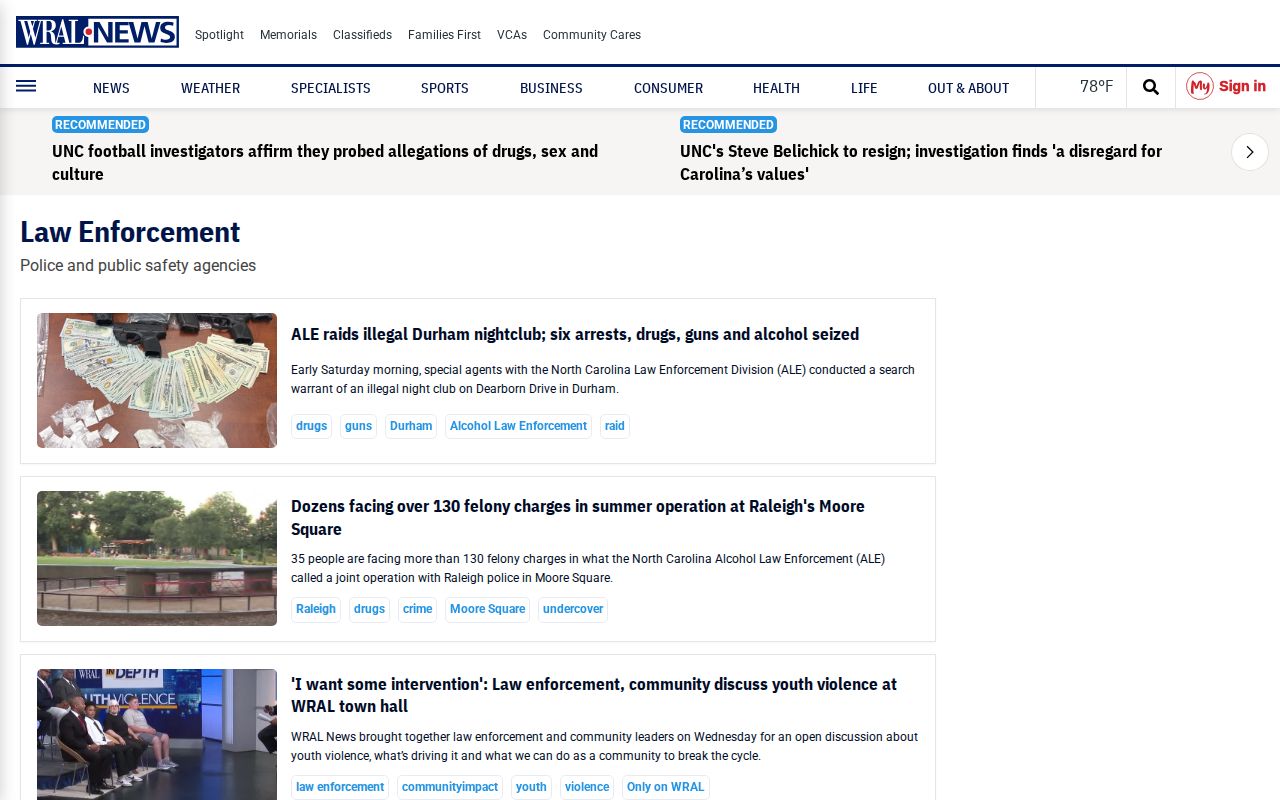
Use the story for its reporting. Then check the arresting agency, the receiving jail, and the court record for the official event and case status. WRAL keeps older North Carolina stories. It accepts factual corrections and documented dismissal or expunction updates, and its correction and update guidance explains the process and the supporting documents required.
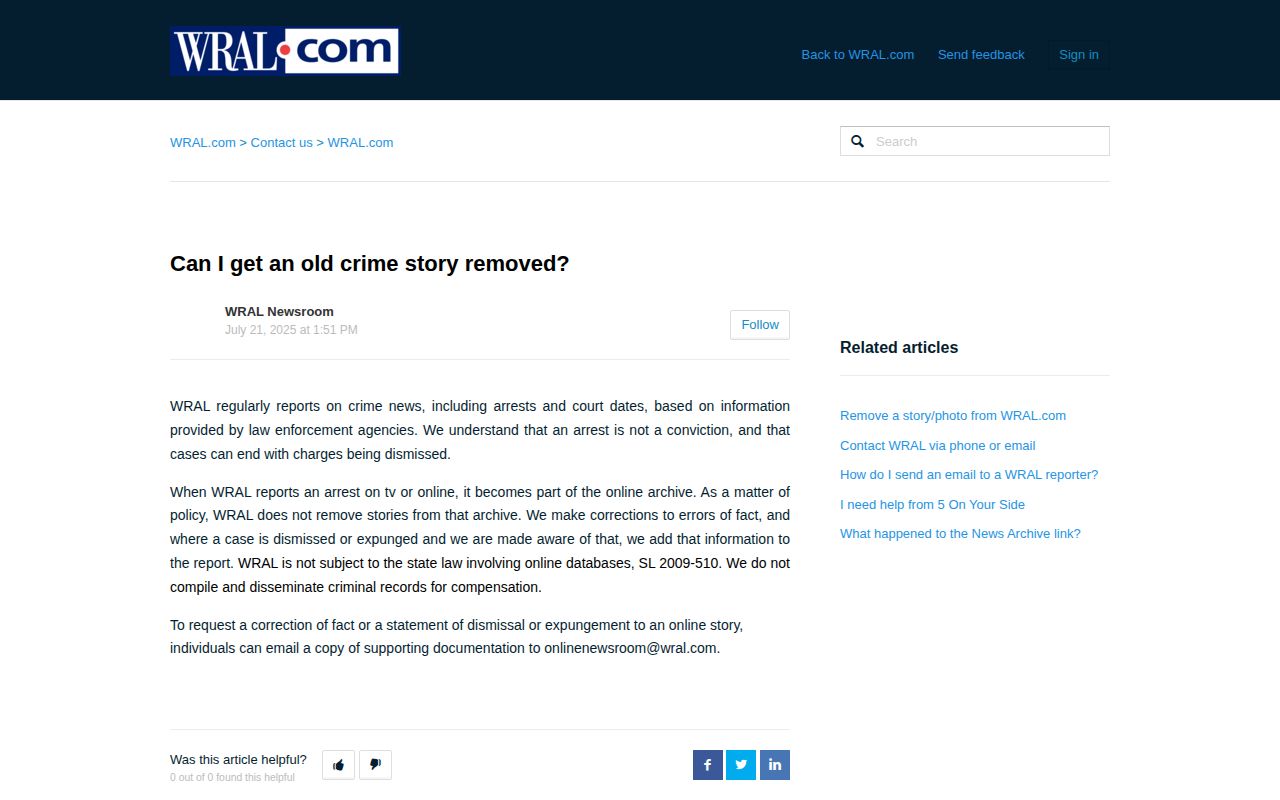
That policy is a correction route. It does not promise removal. News coverage can cross North Carolina county lines and add context, yet it cannot replace the custody or court record underneath.
North Carolina Arrest Log Archives
Retention rules vary by record series, not by website depth. The State Archives of North Carolina sheriff schedule lists many series. These cover criminal-history files, identification photos, investigative mugshots, and inmate records. Arrest sheets, commitments, and releases appear too. Each series carries its own clock. A mugshot outside a case file can follow a shorter span. One filed with the case lasts longer. Inmate records may be destroyed once the scheduled period runs out. That clock starts after release or transfer, holds permitting. For the series-by-series rules, the State Archives sheriff retention schedule holds current details.
One retention period never fits every North Carolina booking photo or arrest record. Local agency schedules require approval before any destruction happens. If a series is missing, consult the Government Records Section. State-agency material moves through a separate path. Government-record collections can carry legal, court, donor, or reproduction limits. The State Archives finding aids help locate record groups. A catalog entry never guarantees every file or photo arrived.
Searching a catalog is history work. It is not a live arrest lookup, and it never proves a booking photo still survives.
Note: Schedule rules, catalog scope, and web-page life span are separate; one cannot prove the survival of another.
Request Older North Carolina Arrest Records
When a county blotter has rolled off in North Carolina, contact the office that created the record. Ask whether it still holds the item or passed it along. State collections work differently. The Archives takes focused requests tied to a person, agency, series, or date range. Staff research stays limited to a specific record. Requests are handled in the order received, with no promised response time. The State Archives ordering and copy-request page spells out the current service route.
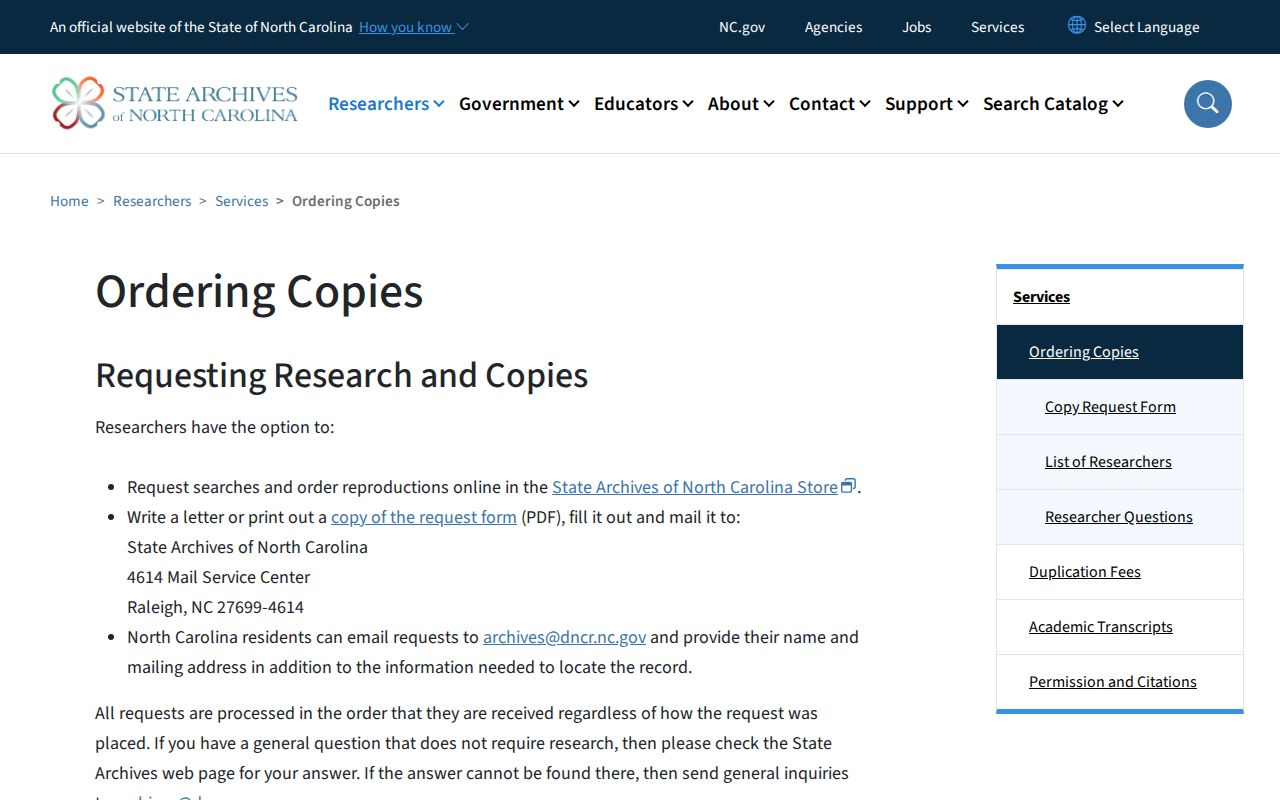
Check the request screen for the current steps and fee terms. Give the full name, agency, county, date range, record number if known, and preferred format. Ask directly whether the file was transferred, destroyed, restricted, or never held. North Carolina residents get an invoice after the inquiry. Nonresidents may owe $20 for a one-record search-and-handling inquiry plus copy charges. The duplication-fee schedule breaks out print, microfilm, photo, and scan costs. A missing web entry may mean an expired page. It could point to a vendor switch instead. The wrong custodian or date field could also explain it. Ask the office which applies rather than trusting a cached copy as the archive.
Note: Public-record status and public access are separate questions; a statute or court order can limit inspection even when a record exists.
North Carolina Arrest Record Layers
State Highway Patrol material adds an enforcement and news layer. It is not a statewide jail log. The official North Carolina press-release archive covers significant highway arrests or operation results. It does not cover every booking. A trooper's arrestee typically lands with a receiving county or regional custodian. That custodian holds the booking entry and custody status.
The North Carolina court portal handles filings and case outcomes, not a multi-day jail blotter. For an older report, confirm the case number and the court result. Do not lean on the initial charge alone. A jail page shows custody only at the moment it is checked.