
North Carolina Highway Patrol Arrests
The Patrol is North Carolina's statewide highway law-enforcement agency. Its core work covers traffic safety, crash reduction, and highway law enforcement. Press releases sometimes name a person arrested during a highway incident or a named operation. The Patrol's traffic-data source even lists "Arrest" among its reported results. That makes NCSHP a useful stop for arrest news in North Carolina. County booking records, though, have a different keeper. Those stay with the local custodian.
The North Carolina State Highway Patrol About page lays out the agency's identity and statewide role. It gives useful background for reading an enforcement notice. The arrest record itself, though, sits with the office that created or received it. A news item can flag an arrest without showing every booking field or custody change.
Statewide activity figures round out the picture. Those totals describe enforcement work across a wide area. They do not name each person arrested. Nor do they offer a live count of who is in custody. You can view the agency's own description on the official NCSHP About page.
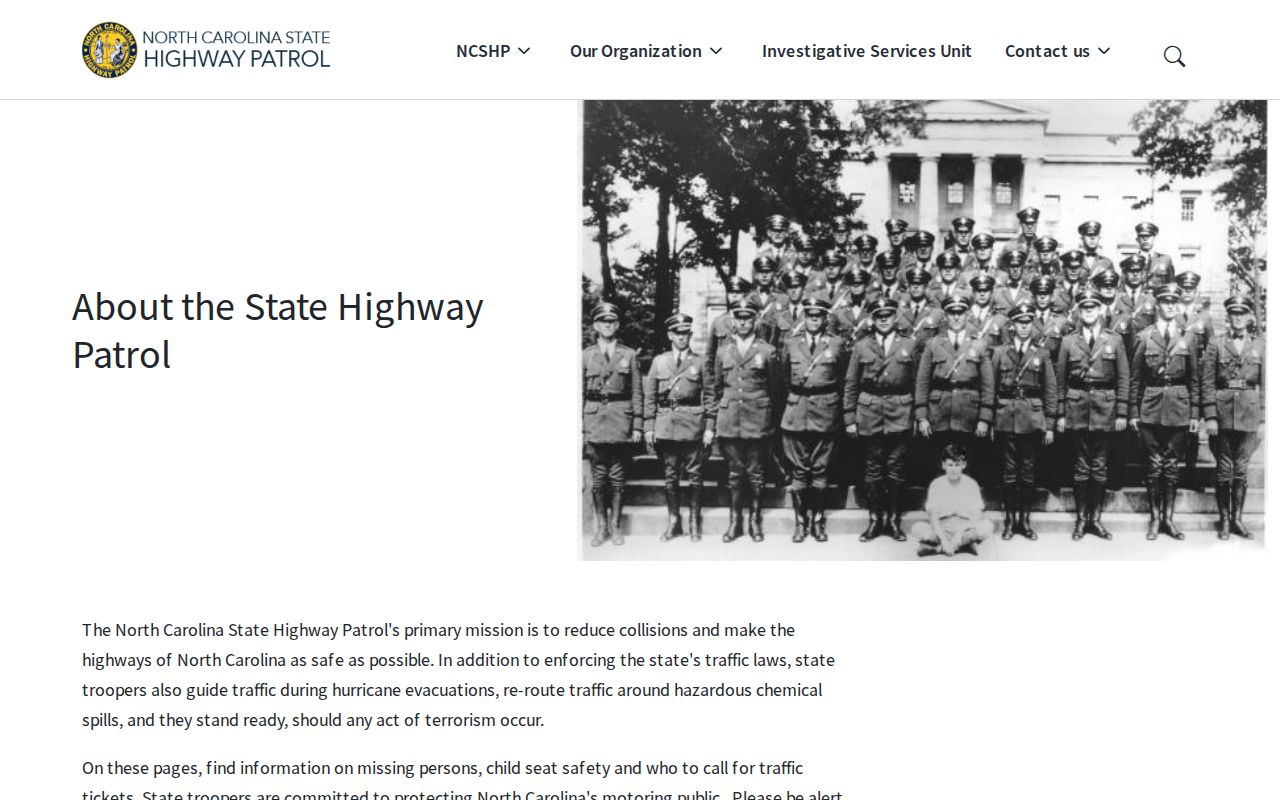
Knowing the agency's identity helps separate an official Patrol notice from a county booking record or a third-party copy.
North Carolina Patrol Arrest Publications
North Carolina publishes no public NCSHP daily arrest or dispatch log. The best statewide sources are event-driven releases, campaign summaries, and enforcement data. Each one answers a different question. A press release covers a chosen event. A data dashboard groups activity by category. A social post may be fast, but it is not a full arrest roster.
| Official channel | What it can show | What it does not replace |
|---|---|---|
| NCDPS press-release archive | Selected incidents, arrests, investigations, and agency announcements. | A complete or daily list of every NCSHP arrest or county booking. |
| Campaign and operation releases | Results tied to a named enforcement effort, as described in each release. | A current statewide count or a person’s present custody status. |
| Traffic and enforcement data | Dashboard and downloads with suspected DWI, checkpoint, and result categories, including “Arrest.” | A same-day booking feed; the data are analytical and lagged. |
| NCSHP-authorized social channels | Time-sensitive public information managed under the agency’s policy. | A full record, a complete roster, or the court’s final decision. |
Filters in the agency archive shift over time. Start with the unfiltered NCDPS archive. Use it as your durable entry point. A filtered NCSHP view can narrow things down. Older posts show publication format, though, not current enforcement totals. A social notice can point toward a case. For custody and outcome, the receiving jail and the court remain the stronger sources.
When a filter returns nothing, drop it. Search the unfiltered archive by place, operation name, or date range instead. Labels and page controls change whenever the site updates. Remember that each result is an announcement. The agency itself chose to release it. It is not an index of every traffic stop or arrest in that period. You can see the event-based format on the official NCDPS press-release page.
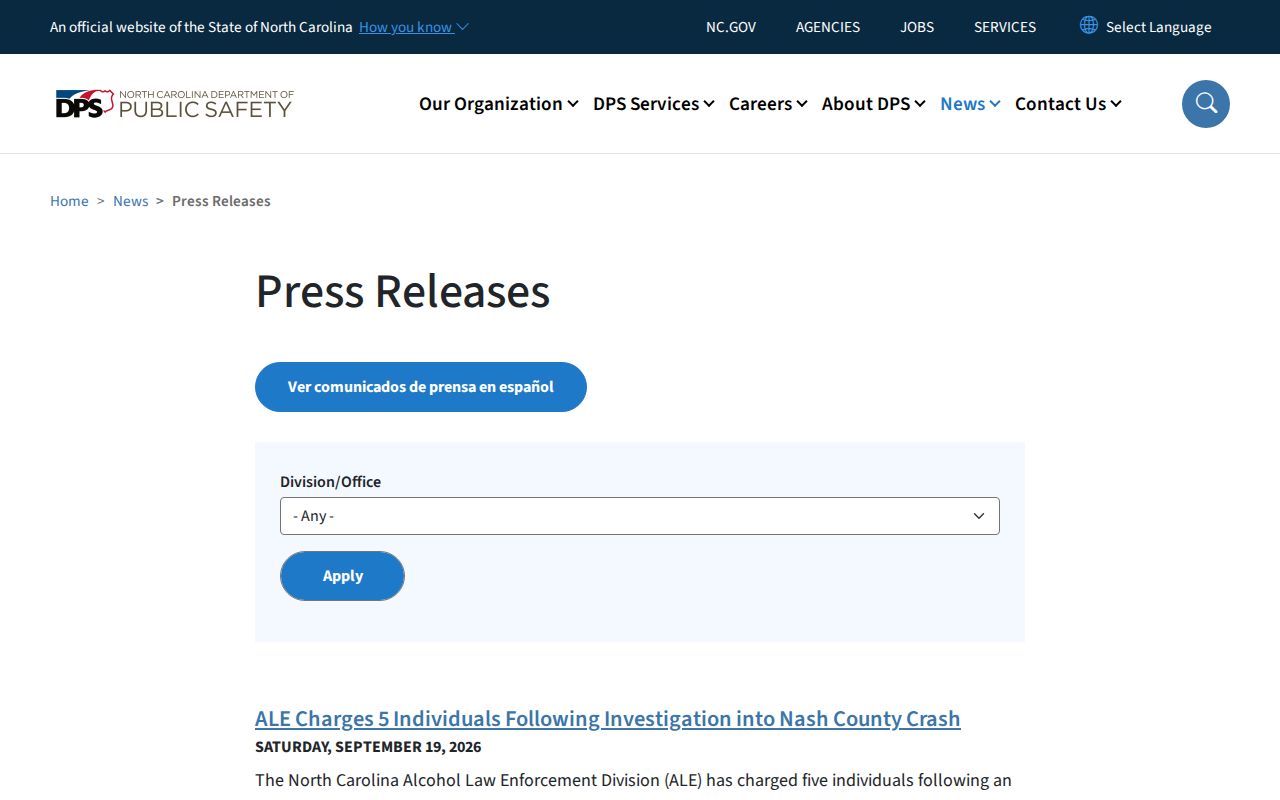
The Patrol picks which incidents to announce. So an arrest missing from the archive may still have a county booking record.
Note: Older filtered archive views can help find an agency release, but shifting filters are not a stable count of Patrol arrests.
Find a North Carolina Patrol Arrest
Begin with the type of record you need. An agency announcement confirms the Patrol reported an incident. A jail roster entry shows a person booked at one detention facility. A formal report request asks NCSHP for records the Patrol itself holds. Timing and detail vary across these records. Lean on the arrest location and the issuing office when picking your next step.
- Search the official NCDPS archive for the incident, date, location, or operation. Treat a release as a selected news account, not a list of all arrests.
- Use the arrest location to identify the likely receiving county or regional detention system. The North Carolina County Directory routes to local booking sources; county seats do not determine where a person was booked.
- For a recent custody check, look at that custodian’s current roster or newest-bookings view. The statewide same-day landscape is explained on Arrests Last 24 Hours, but each local source sets its own fields and publication window.
- If the online view does not answer the question, contact the record-holding detention office or request the Patrol report through NCSHP’s public-records process. Ask for the record type that matches the need.
A missing name does not mean no arrest occurred. The Patrol may have announced an event without publishing a roster. The receiving facility may rely on a separate name search or booking number. Spelling, date, and county all matter in a search too. Once someone is released, the live custody view may drop the booking. A record still exists with its custodian.
Keep the roles straight. The Patrol reports its enforcement activity. A detention agency logs who is booked in and released locally. The court records how the case ends. A booking photo is not guaranteed online. The receiving custodian controls its public roster. State law and local policy shape that call.
Arrests near a county line can involve more than one agency. Start with the place named in the official notice. Ask which custodian accepted the person. A troop office covers the Patrol side of the event. The jail or regional detention system covers the booking side. A report request to NCSHP will not pull records held by that separate custodian.
Where North Carolina Patrol Arrests Are Booked
The Highway Patrol makes arrests. It does not run a statewide jail. After a trooper takes someone into custody, the person goes to a county detention facility or another receiving agency chosen by the charge, the location, and open bed space. A troop office can explain Patrol geography. It cannot tell you which jail holds the person.
So expect two lookups. Pull the Patrol's incident publication first. Then contact the receiving county for booking and current custody status. The directory leads to county sites, though some detention systems serve several counties at once. When a county roster returns no match, confirm the actual receiving facility before you stop searching.
State custody creates a separate record path. The North Carolina Department of Adult Correction offender locator covers state prisoners and supervision, not county-jail bookings.
Request North Carolina Patrol Arrest Records
Written requests go through the N.C. State Highway Patrol Public Records Request page, which accepts online and form submissions under the North Carolina Public Records Act. G.S. 132-6 calls for prompt access and allows lawful costs. There is no flat fee for an arrest report. Don't assume the crash-report charge applies. Mail a written request to the N.C. SHP Public Information Office, 4231 Mail Service Center, Raleigh, NC 27699-4231, or use the agency's online or form option.
Keep each request focused. Staff locate an existing record faster than a broad sweep, which may move in batches or take longer. The Patrol will not build a new record. Compiling one is not required. Confidential details may be redacted before a copy is released.
- Open the official request page and choose its online or form option, or submit a written request.
- Name the record sought and include useful search details, such as date, location, names, incident or case number, and related terms.
- Ask for the existing arrest, incident, or enforcement record held by NCSHP. Send a separate request to the detention custodian for the booking record or local booking photo.
- Track the response. NCSHP says it acknowledges requests within three business days, then gives an estimated response time and any lawful charges. The estimate is not a fixed completion promise.
The request form appears on the official NCSHP public-records request page. It lays out the route for asking the Patrol for records.
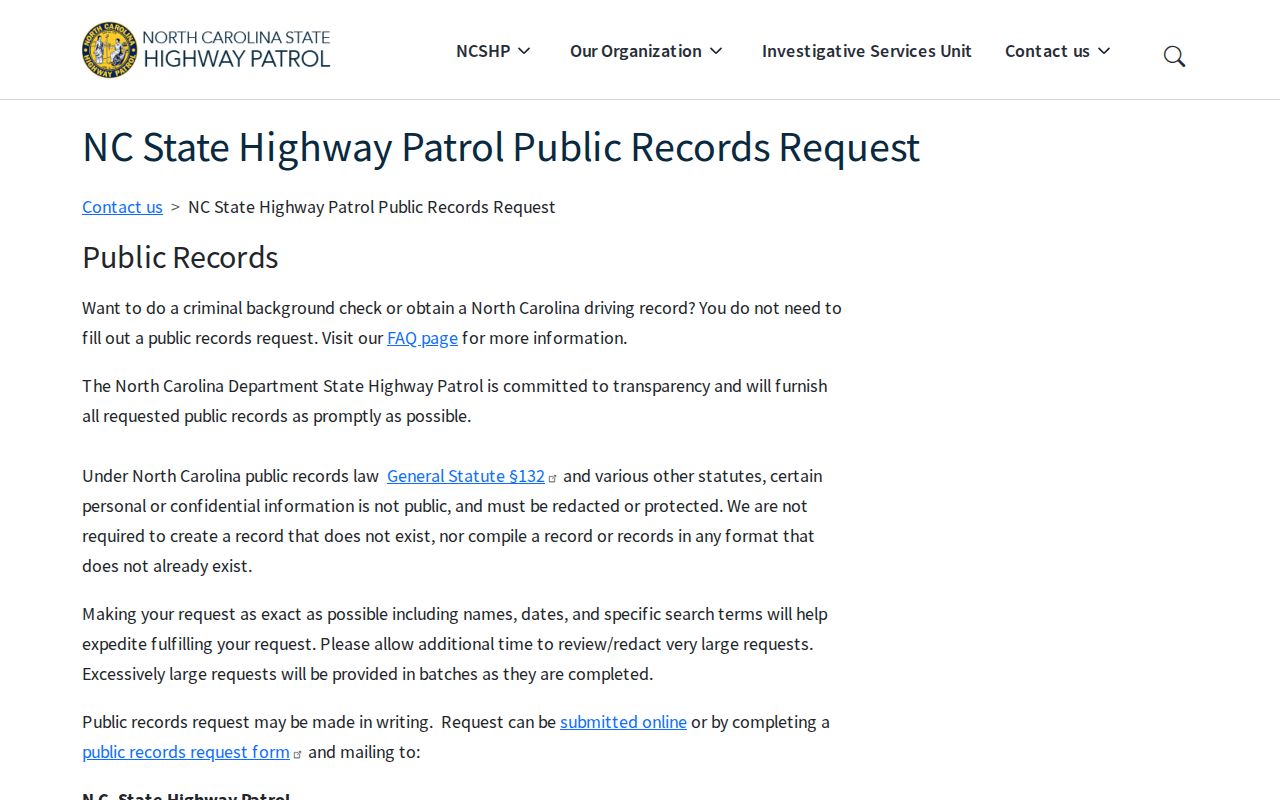
Follow the agency's current instructions for submission and wait for its cost estimate. Never assume a report is free or priced at a set fee. Crash reports run through a separate system. The vehicle-search crash portal holds reports since May 16, 2013, and entries normally appear five to seven business days after a crash. Those results are not certified copies. A crash file may relate to a traffic event. It is no substitute for a booking record or arrest disposition.
A clear request names an existing record. Give staff enough facts to find it. Confidential material may come back redacted. NCSHP will not build a new summary or merge several systems. Compiling one is not required. Bigger requests move in batches. Timing depends on the request, not a fixed arrest-report schedule.
Note: A focused request for an existing Patrol record differs from asking a detention office for its intake record or a court for a case result.
North Carolina Patrol Arrest Data
The dashboard shows enforcement patterns, not present custody. The NCDPS Governor's Crime Commission posts quarterly updates with a publication lag. Its categories include suspected DWI, checkpoints, and results like "Arrest." An aggregate count won't name a jail. It also won't show a booking photo. It can't say whether a charge later changed.
Campaign releases answer a narrower question. A named-operation report gives stated results and a date range. That differs from an individual incident report. It also differs from a roster recording who entered one facility. Read date labels with care. A release date differs from an event date. A booking date and a data period mark other points in the process.
Read North Carolina Patrol arrest news as one layer of a record trail. Use the NCDPS release for what the agency chose to announce. Request an existing Patrol record when you need more detail. Confirm custody with the receiving detention office, and leave the disposition to a court.
North Carolina Troop Structure and Arrests
Troop offices handle public contact across North Carolina. The Troop Offices page shows the agency's current statewide structure. Use it to find the Patrol office tied to a place or inquiry. That structure is an enforcement reference. It won't say which jail took custody.
The agency's About page reports more than 1,600 troopers. They cover nearly 80,000 highway miles. The 2024 figures include 271,639 speeding citations, 27,436 school-safety checks, and 17,016 DWI arrests. Those are reported numbers for one year. They are not live totals. They are also not a count of all arrests across North Carolina law enforcement. The official NCSHP page displays this public contact structure for the statewide agency.
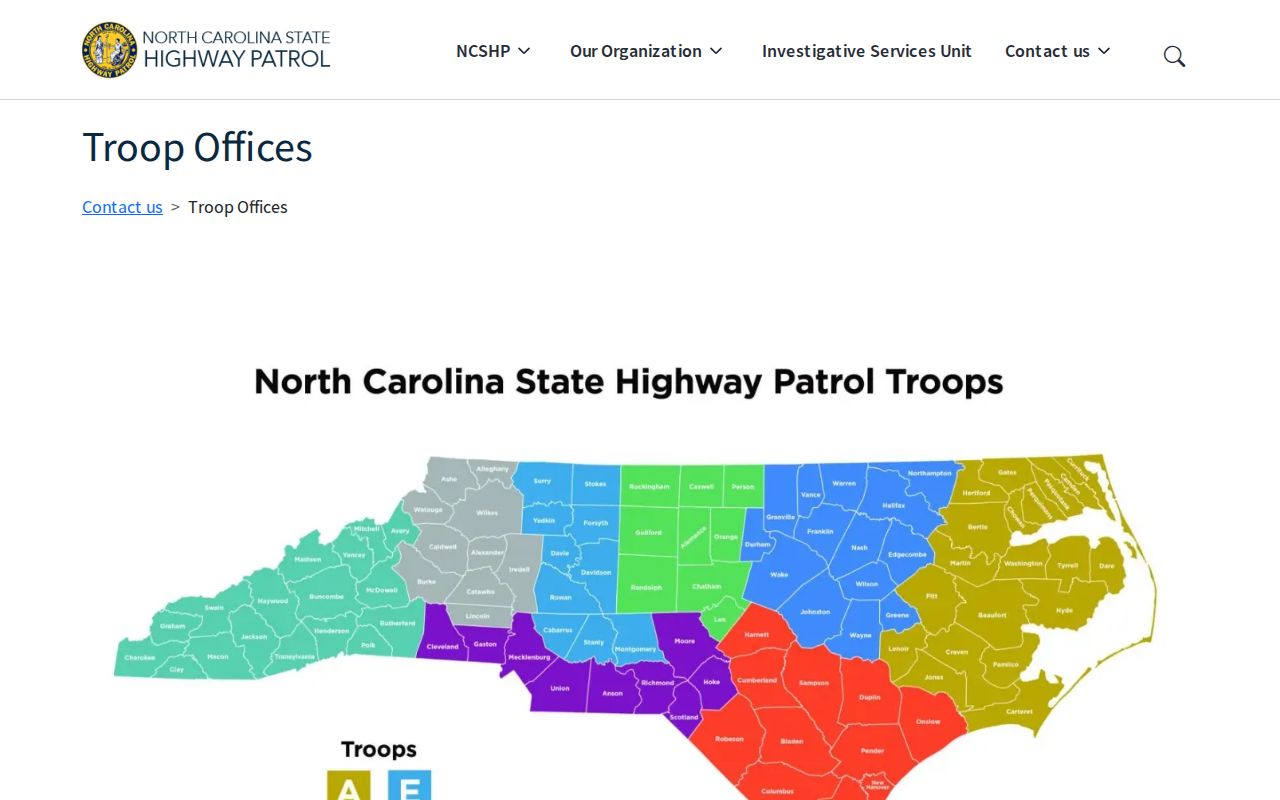
Troop information helps route an agency question quickly. Always confirm booking details with the detention facility that received the person. The court handles case status. The 2024 totals describe different kinds of Patrol activity. Speeding citations and school-safety checks are not arrest counts. The reported DWI arrest figure covers only part of Patrol activity that year. For one case, match the date and place to the Patrol source, then follow custody to the receiving agency.